






Tuesday, May 6, 2014

Zanzibar blog

This blog is a collection of things we think are new and interesting in Zanzibar.

Many of these blogs are press articles concerning Zanzibar which we post on this blog as we find them. Please read on and feel free to post any comments you like.

Please visit our site www.tanzaniaodyssey.com for detailed information about Zanzibar's Stone Town or Beaches

To view videos of the country and the various lodges please see our video console

Or for advice / quotes or anything else please call us in London on 44 (2) 7471 8780 or in the USA on (toll free) 1-866 356 4691

Labels:

Thursday, June 18, 2009

Zanzibar lowers VAT to attract more tourists

Zanzibar lowers VAT to attract more tourists

The minister of State in the Zanzibar President's Office (Finance and Economic Affairs), Dr Mwinyihaji Makame, yesterday unveiled unexpected budget measures that target, among others sectors, tourism, currently hard hit by global economic meltdown.

The minister also announce the lowering of value added tax(VAT) from 20 per cent to 18 per cent as part of efforts to mitigate the effects of the global financial crisis on ordinary Zanzibaris and to boost tourist arrivals in the Isles.

The minister said the Zanzibar economy, like many others developing countries, has been adversely affected by the global crisis, saying as a result, economic growth rate would decrease from 5.4 per cent last year, to 4.9 this year.

He said revenue from tourism and foreign direct investment are also projected to decline drastically.

The number tourists visiting Zanzibar has also declined by nearly 30 per cent this year, with the minister projecting a fall of revenue from the sector by ten per cent this year.

"The Isles government has taken urgent measures to rescue the tourism sector by re-assessing our markets and review the whole tourism system in order to attract more tourists," he said.

He said plans were underway to strengthen zonal tourism by encouraging hoteliers to lower charges by applying standard rates and to launch aggressive promotion campaign abroad.

For more infomation about Holidays and honeymoons in Zanzibar please click here

Monday, June 15, 2009

History Channel ventures through Zanzibar and Tanzania

Zanzibar is the starting point for the new US reality TV show on the History Channel, retracing New York newspaperman Henry Morton Stanley’s 19th century search for Scottish explorer David Livingstone.

The History Channel crew gathers in Zanzibar for a 1,550km journey, mainly on foot, that they aim to complete in just 30 days. The quartet consists of a female anthropologist and former cheerleader for an American football team; a British thrill-seeker who specialises in televised tests of endurance; a guide who led a blind climber to the summit of Everest; and a former CNN war correspondent.

The initial segment of the eight-part series drew a larger-than-average audience last week. An estimated 1.3 million viewers turned to the History Channel last week to watch Expedition Africa, which presents a fabulous view of Tanzania, although was slated for its lack of historical perspective.

In Expedition Africa, Burnett recruits four adventurers to follow the general route taken by Stanley, who set off from Zanzibar in 1869. It took the journalist nearly nine months to locate Livingstone, a famous anti-slavery campaigner who had gone missing after starting a trek in 1865 in search of the source of the Nile.
Stanley found Livingstone in Ujiji on Lake Tanganyika, greeting him with the famous words, “Dr Livingstone, I presume.”

History Channel publicists suggest that the team will undertake the quest with only compass and maps to guide them. Much is made of the dangers they will supposedly face along the way, beginning with a dhow voyage from Zanzibar to Bagamoyo during which the adventurers are actually splashed by waves.

Burnett also strives to contrive challenges, sending the foursome over the Uluguru Mountains even though Stanley had walked around them. The the intrepid band, is accompanied by a full camera crew, a large contingent of Tanzanian porters and a pair of suitably colourful Maasai warriors - brought along to repel attacks by various predators.

“It’s imperialist nostalgia,” the US newspaper Variety said, “watching four white people hack through the bush with a support staff of natives.” It is reported that “the History Channel sometimes airs respected documentaries, but Expedition Africa has little of interest to say about Stanley, Livingstone or East Africa, neither then nor now.”

The Washington Post warned, “There is little history and even less reality in Expedition Africa. It is neither entertaining nor informing.”
But find some redeeming qualities in Burnett’s version of an African chronicle, including “gorgeous photography, head-spinning production techniques, and deep and abiding love of nature, adventure and the great world at large.” We at will be watching it for that alone! Alternatively, just have a look at Tanzania Odyssey's Zanzibar history, and book your own trip.

Labels: , , ,

Tuesday, May 12, 2009

Mnemba Island Lodge

video

Labels: ,

Fantasy Islands

It is said that many of the Baobab trees are older than Christ; but then all of equatorial Africa’s east coast is riddled with hearsay. Over a few days I was given the gen on an infamous murder case, informed of cheetahs dancing in mangroves and of a giraffe who fell in love with a windsock. All wildlife was covered.

Shelagh village (on the island of Lamu) is the ethnic equivalent of Saint Tropez; you need a brassy mentality and platinum card to enjoy the place. It’s a generic, happy Africa where Princess Caroline of Monaco can slum it when she’s feeling native. I meet a few ex-pats including a tall, slim man, thoroughly tanned and totally pickled. He has startling, ultra marine eyes imprisoned in roasted flesh behind his Cartier spectacles. He tells me, between volcanic, hacking coughs, that it’s the only place to be; I’m not convinced and head south.

The boat trip from Shelagh is exotic, travelling through immense mangrove forests and past the occasional cove, arriving an hour later at Kipungani Explorer. The resort is charming because it’s everything that Shelagh village is not: simple, isolated and with an atmosphere from another time. The office, piled high with box-files and has an airy, make-do colonial feel, like the pleasant managers who might have stepped out of a black and white movie. It’s under-stated and stylish; each large room, or banda, is made from palm thatch and is a good spot in which to chill.

Talk of turtle eggs hatching caused excitement, but nature being capricious meant they didn’t during my visit. The local ecology and community is important at Kipungani; there’s talk of making the place totally eco-friendly – although they appear to be well on their way to me and already look after the turtle nesting sites.

I take a boat to “the Point”, an elbow of land at the far end of Lamu sticking out into the Indian Ocean. The beach there is 12 kilometres long and I was the only person on it. The sense of space is incredible.

Opposite Lamu town is the jetty for Manda Island airstrip. It is the most primitive (read pretty) airport I’ve been to. The baggage reclaim is a concrete altar under a thatched roof that is bizarrely Anne Hathawayesque. An Air Kenya plane is waiting, I’m the only passenger – and we take off on a 15-minute flight over mangroves and islands. My destination, Kiwayu island, goes one better than Manda; it’s merely a grass strip cut in the bush with the added risk of ploughing into a dozing buffalo on touch-down.

Ten minutes from Kiwayu Safari Village by speedboat are the perfect white coral sands of The Baobabs of Kitangani, an exclusive island hideaway. This sybaritic luxury is designed for just two people in the local “Bajuni” style – local thatch and matting without the use of nails. A path leads up a gentle hill to a vast, open bedroom the size of a small supermarket with a bed of such gargantuan proportions it defies belief (it’s 9 feet square, a little on the small side if it were a studio flat in central London). A few yards further on is another open room complete with bar, hammocks, Lamu beds, dining table and a stunning view looking west across a lagoon to the mainland and over a vast plain to hills in the hazy distance. My reaction to the place is physical, I want to scream or laugh hysterically, or run and hug a baobab.

The engines of a 22 ft rib gurgle like an expensive car and I am powered off leaving Kitangani in my wake. Pushed back into white leather seats by the Turbo-charged engine, I glug from a cool beer as I’m sped through mangroves, past creeks and into the sun, eventually docking beside an eccentric jetty built of twigs. Munira Island Camp is a small place at the far end of Kiwayu Island. It’s extremely simple – very picturesque. Delicious vodka tonics are brought – limey and chilled by huge chunks of ice – and the sun sinks behind Africa. It occurs to me that I am the first to see it go that day – I can’t get any further east on the continent. A telescope is trained on the sun as it disappears (the Earth’s atmosphere making a natural filter) and the last vestige turns neon green. I’m entranced. Within minutes a crescent moon shows up wearing the faintest of halos.

The tiny island of Chumbe is six kilometres off the coast of Zanzibar (it’s one of the few entirely eco hotels in Tanzania). I watch previous guests alight from the transfer boat, but I’m the only person going back out to the island. The boat captain is stuck deep in his thoughts, so I keep mine to myself and enjoy the ride. The plastic seats are recycled. Some are cracked and repaired with nylon fishing line.

I’m greeted, and ushered into the main building, an enormous, sweeping makuti thatch pentangle that entirely covers the remnants of a lighthouse keepers lodging. The original house is now offices and a sweetly earnest classroom/field-centre: kids drawings and collages decorate one wall and a nature table dominates another.

The head ranger, Omari walks me around the island. I find an exquisite cowry shell that I’m inclined to keep, but, having been given a stern lecture on not to remove anything from the beach I reluctantly put it back. There’s all sorts of coral, a couple of baby conger eels under a rock, ridiculous starfish, sea-anemones the size of small cushions and any number of crabs, stripy fish in rock-pools and the husks of sea urchins.

After lunch I’m equipped with fins and a snorkel and taken off shore. It’s overcast so the explosion of coral colours beneath the surface are muted; even so, it’s still spectacular. A couple of hours later Omari comes to find me, and we meander through the forest to look at land, rock and hermit crabs, fleshy plants that exude white poison, fossilised coral and giant clams and Baobabs that were obese long before Livingstone ever set eyes on Zanzibar. I’m shown the lighthouse – more like the Tower of Babel – and we conclude our stroll. There’s a naturalness, conviction and enthusiasm for this project that is rare nowadays. I’m distracted as I’m eating dinner – Omari has a rare coconut crab to show me.

A message awaits me in Stone Town, Zanzibar – “flight to Kinasi, Mafia Island at 12.30, please be at the airport by 12,” although where exactly, I’m not sure. A man approaches me near the check-in: “Mr Nick? I am Rashid, come this way.” I pay 2000 shillings departure tax and wait without a ticket. Rashid waves from across the tarmac and points to a red aeroplane – he tells me to sit in the co-pilots seat while he goes elsewhere. Joseph, the pilot, joins me – it’s just the two of us and we climb to 7,500 feet to look down on a wonderful blue world. Below me, as we come into land, is a Whale Shark – a huge shadowy mass much bigger than a boat. I consider pointing it out to Joseph, but resist the temptation as we skim treetops and head to the runway. Kinasi is perched on a ridge overlooking the ocean, it’s manicured and lazy, a place that always catches a breeze.

Next morning a guide, Kirobo, takes me to Choley Island, a place heady with the scent of Frangipani. Kirobo introduces me to Alan, the manager of an unusual tree-house hotel, and then shows me the rest of the island: there’s a colony of fruit bats, a shipyard with a beautiful dhow under construction, a school, wells, everywhere the curled rinds of orange, a dilapidated mosque and simple mud huts. I like the place.

Mid afternoon, and I take the Kinasi dhow to a tiny island where the lagoon ends and the ocean begins. The snorkelling is great, the coral is luminous verging on fluorescent, and the fish outrageously coloured. I see stonefish (ugly and poisonous), pipefish, moray eels tucked among the coral, starfish that Erte obviously designed. Back on board, and instead of motoring, the dhow is put under sail and we creak majestically to Kinasi.

The most extraordinary colours are visible in the sound before Pemba Island. The palest white leaks into an exorbitant turquoise. Pemba is unseasonably festive – the smell of Christmas cake mix follows me on my journey across the island; it’s the smell of cloves drying in the sun.

Waiting for me in Mkoani is a super-flashy boat. If I thought transport in Kiwayu was like an expensive car then this guy is an executive jet. But not even that prepared me for the hidden beauty of Fundu Lagoon; it sneaks up on you as you speed across the bay, gradually peaking from out of the jungle. It is effortless and luxurious in a bare-foot, sensual way. Swahili cuisine (a tangy mixture of African, Arab and Indian ingredients) is of a similar standard all along the coast; but the food at Fundu is very good. I sink what might rate as the best Bloody Mary of all time and sleep dreaming of the white sands and blue seas in front of me.

Next day I head to the Ngezi forest – the last tract of tropical rainforest on the eastern shores of Africa – tucked in the northern most reach of Pemba. I wasn’t prepared for the smell – thermals of warm scent wafted out of the sticky, delicious, atmosphere and mugged me. The vegetation, an amazing mixture of 50 metre trees and creepers, leaves the size of Li-Los and thick dense undergrowth is an excessive backdrop for the cacophony that followed me everywhere. The forest is percussive, the sound of maracas, eccentric clicks and the whirr of a dentists’ drill come flooding through the greenery. I was stalked by a butterfly with wings the size of saucers and had to dodge crabs kitted out with bright red boxing gloves. The monkeys just laughed at me.

Reproduced from travel intelligence - by Nick Maes

Labels:

Thursday, May 7, 2009

Exploring Zanzibar; a Tropical Island Adventure - By Annabel Skinner

Zanzibar wraps its reality around you like a lingering fairytale. This tiny archipelago of Indian Ocean islands that once lured sailors, Sultans and slavers to its far-distant shores is so charismatic that it sweeps you into its shadowy romantic past and sunlit present all at once, and finally sets you down, all sun-bronzed and laden with spices and island art, and memories of an exceptionally sparkling and colourfully abundant sea.

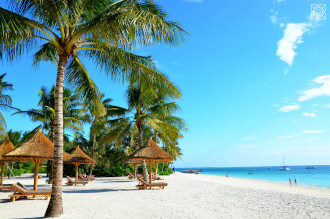
The main island is small and easy to explore, with glorious white sand, palm-fringed beaches rewarding you for just a couple of hours’ drive to the North coast and the same to the East, along mainly hopeless but endlessly fascinating roads flanked by simple homesteads, roads worn more by foot or bicycle and frequented by chickens. There is a time warp here, this place where the past is so responsible for the present, where mobile phones, internet connections and television are all relatively recent, and where the history and culture is so imbued that you can simply stretch out beneath the dappled shade of the coconut palms and soak it up. Welcome to Zanzibar, and a world apart.

Sailors and traders from the first century AD came to the lands of ‘Zinj el Barr’, the Black Coast, bringing beads, porcelain and silks to trade for gold, slaves and spices, ebony, ivory, indigo and tortoiseshell. They waited for annual monsoon winds to fill their dhow sails and bear them across the Indian Ocean; today’s visitors usually arrive in a small ‘plane or ferry from Dar es Salaam. But these still afford a measured approach, allowing a breathtaking vision of sparkling cerulean waters over sandbanks and reefs, and then into Stone Town, the ancient island capital, still more of a town than a city, a maze of winding pedestrian streets in a hotchpotch of rooftops, a mass of corrugated iron overwhelming the historic stonework beneath.

Helplessly entwined in its own history, the people of Zanzibar are the Swahili, evolving from the influx of mainly Arabian and Persian immigrants who settled on the East African coast and islands to trade and escape the political upheavals of the Gulf two thousand years ago. Their cultural history was founded in sailing dhows, similar to those that glide by its shores today, boats that brought people, language and cultures and long centuries of power wrangling.

The Arab immigrants were overthrown by the Portuguese in the 15th century, until the Sultan of Oman finally saw them off for good in 1698 and started building the Stone Town of today; the Old Fort on the harbour was built on the remains of a Portuguese church dating back to 1600. Visitors to Stone Town still encounter the grandiose vision and dominant architectural style of a confident young Sultan who transferred the seat of his sultanate from the contentious capital of Muscat to the breezier climes of Zanzibar in 1832, and then began palace building in earnest, and seeding the coconut palms and clove plantations which soon defined Zanzibar as the ‘Spice Island’.

Driving through the island centre now, it is worth stopping to explore the spice plantations, where a guided walk for passing tourists is likely to be more lucrative than vast crops to export, but it is a fine sensual pleasure to crumble cinnamon bark straight from the tree, to breathe the scent of cloves drying in the sun, to taste and guess the spice from a handful of pods and powders. These are well used by the chefs and kitchens in beach hotels, where fishermen daily bring the catch of the day to be grilled, baked, battered or blanched with assorted Zanzibar spice.

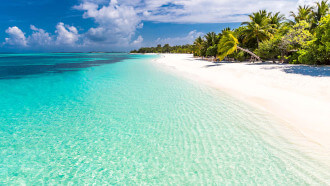
The coast is dotted with hotels, self-contained beach hideaways that relish their privacy and provide various levels of style and comfort. I have been to most and head north by choice, to the northernmost peninsula which is occupied by Ras Nungwi Beach Hotel. The name is a very literal Swahili translation, but it says nothing of how this beach is secluded and the coral sands are blanched very, very pale. It does not tell how the wonderfully translucent and clear the sea is here, where a coral reef surrounds the shore creating a shallow wide expanse to explore until the tide rises high and then turquoise waves crash onto the beach. It is a naturally beautiful place.

Turtles come ashore to lay their eggs when the moon is full, and the surrounding reefs are a thriving colourful world to snorkel and dive. Ras Nungwi Beach Hotel is essentially respectful of its place, each room constructed from local wood and coral rag to create a number of thatched round houses along the beach, with lodge rooms in gardens behind. Soft sand pathways link the central thatched and open-sided restaurant to the rooms, pool and dive centre, providing the comforts of a fine hotel with a rustic, beach hideaway style. This is a fine place to lie back and soak up Zanzibar, crack open a coconut, watch the dhows on the far horizon and look forward to spice-scented, star filled African night.

Labels:

Wednesday, May 6, 2009

Top 5 hotels in Zanzibar

In our experience (12 years of sending clients to Tanzania and Zanzibar these are our favorite lodges on the island Clicking on the links will bring up a review and genuine video of the hotel

Ras Nungwi
Beyt Al Chai
The Palms
Shooting Star
Matemwe Bungalows

However, different lodges appeal to different people so we strongly recommend a telephone call to discuss 44 (0) 20 7471 8780

Labels:

Pemba and Zanzibar

reproduced from the Sunday Times 4 January 2009
by Lionel Shriver

The scent of cloves on the breeze, deserted white sand beaches, snorkelling off the coral reef ...

As Sartre would agree, for contemporary travellers hell is other tourists. As my greying, long-haired hotelier in Stone Town despaired, Zanzibar 15 years ago was “a paradise”, yet now mills with sandy, sunburnt Europeans in flip-flops, clutching bottled water.

Kindred riffraff hold up an unwelcome mirror, for other tourists are an embarrassing reminder of what we ourselves look like.

Thus real luxury tourism requires an extra layout of time, effort and dosh to ensure that you do not bring with you half the population of Dulwich. For stalwarts willing to hop three different planes, slump through two charmless layovers in grotty African airports with no AC, board a minivan and then catch a speedboat, paradise is still on offer.

A stomach-churning half-hour plane ride in a 20-seater from Stone Town’s airport, Pemba lies 50 miles northeast of Zanzibar. About half a million, mostly Muslim, Tanzanians inhabit this leafy, lumpy island, which is bursting with gargantuan papaya, jackfruit and mango trees, like the set of Jurassic Park. Locals survive by subsistence farming of cassava and plantains, as well as from harvesting Pemba’s one famous cash crop: cloves.

It was the clove connection that first attracted me. Maybe I betray my weakness for pumpkin pie, but when my companion on this trip first told me about an island permeated by the aroma of cloves, I had to go. Thus when a minivan picked us up at Pemba’s airport in Chake Chake, I strained out of the windows with petulant sniffs.

Yes, the tin-roofed houses of red clay and sticks were picturesque. Women in bright kangas and men on bicycles with baskets of fish were agreeable reminders that I had finally ventured further afield from my London flat than Borough High Street. But where was the perfume of cloves?

At last, as the van drew toward the southern port of Mkoani, mats spread with a spiky brown nubble lined every verge. In town, hilariously, swathes of cloves were spread to dry not only down the road’s meridian, but out on the tarmac, where cars and cycles crunched across the crop.

The van infused with the smell of hot whisky. Pay dirt. That jar of umber nails in my spice cabinet would never seem the same again. If nothing else, when I next mull wine I will wash them first.

The island has a few primitive hotels and diving hostels, but there’s really only one place to stay on Pemba.

Granted, it’s pricey. But even in its low-end hillside huts, £205pp per night includes meals and booze; for that price in New York City, you’d be lucky to get a single bed at the Y and a Nathan’s hot dog. Unless you’re clinging to youthful bohemian pretensions, which I long ago swapped for a hot shower and some assurance that nobody would steal my laptop, after all the bother getting there, you might as well spring for Fundu Lagoon

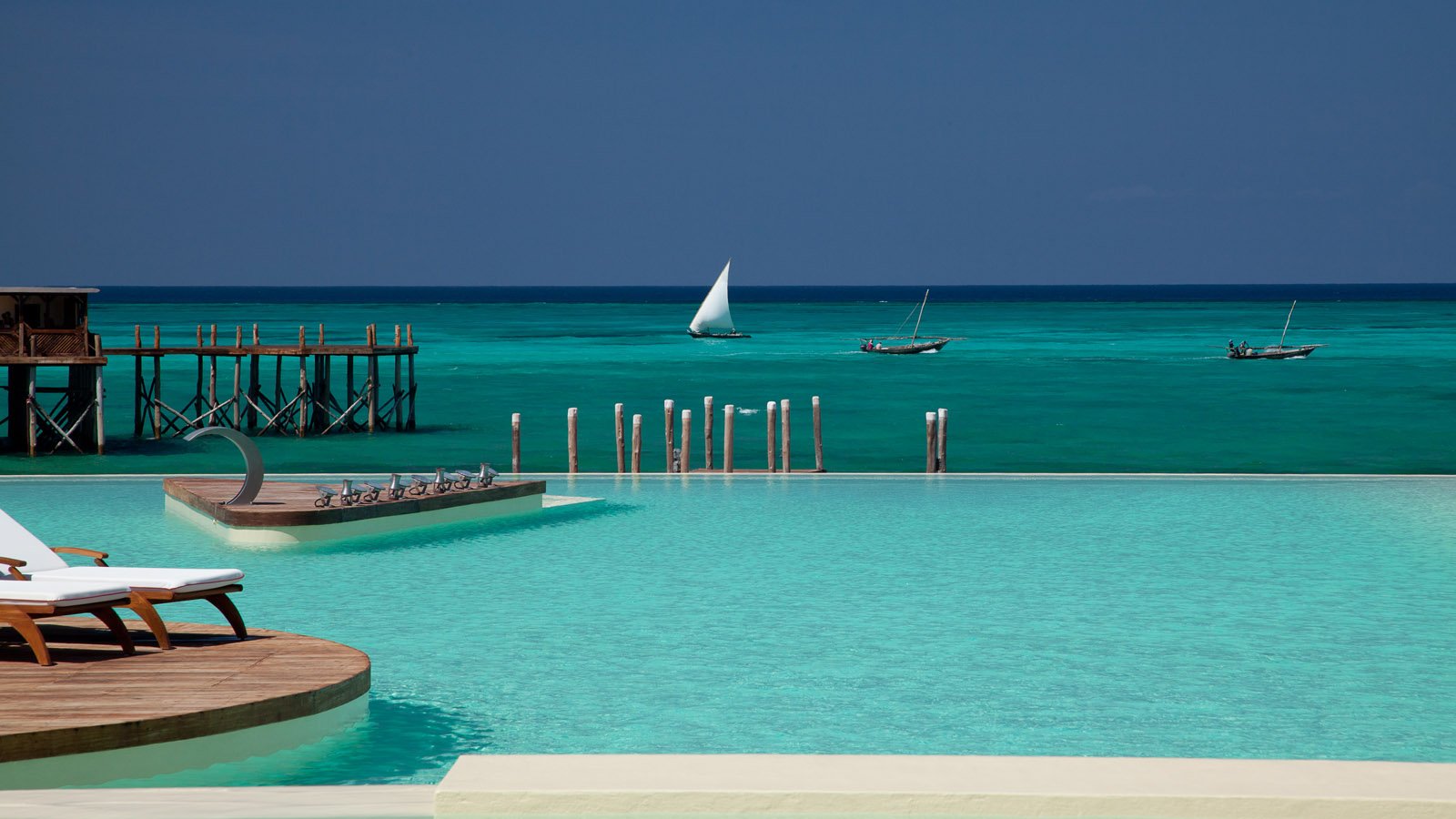
Fundu’s speedboat dropped us on the jetty. Thatched in coconut palm, tasteful tented accommodations lined a beach of the kind of fine, white sand used in hotel ashtrays, before a sea of such a surreal aqua that it looked Photoshopped.

At first glance, the vista resembled those mendacious panoramas in travel brochures that, in reality, prove upholstered in edge-to-edge beach towels, where vendors hawk bad, melting ice cream, and droves of paunchy fellow nationals in loud swimsuits wish you weren’t here, either.

Yet this lagoon’s coastline is pristinely underpopulated. Even in the height of the summer wedding season, with a mere 18 units, Fundu can grow only so crowded. Sporting three bars, an entertainment room, three lounges, two restaurants and five different places to kick off your shoes in your own encampment, it is one of the last beach resorts on earth where you can get away from other people.

From the first day, I countered sunstroke with sidestroke at sunset and, aside from the odd local fisherman poling a hollowed-log canoe called a mtumbwi, I had, it seemed, the Indian Ocean to myself.

Fundu’s amiable management is well aware that paradise is intrinsically dull, and tries to keep the programme moving. Barbecues on the beach (with a whole red snapper the size of a small whale) and Swahili dinners on the jetty (chopped cassava leaves, seafood in coconut milk) help to keep the tedium of overeating haute cuisine to a minimum.

Numerous diversions undercut the insidious enervation of hedonism. Though Fundu offers diving, including for beginners, the snorkelling on the coral reef off Misali island is sufficiently top-notch to skip the cumbersome gear. A morning’s speedboat plough through pods of spinner dolphins was well spent; these beguilingly undersized dolphins throw themselves into the air and twirl: maritime break dancing. Yet, in truth, the best entertainment at Fundu is a good book.


Two resident Balinese pros provide massages, but be prepared to strip down to ballooning disposable plastic nappies, the most humiliating garment I’ve worn in my life. Facials and body scrubs employ the better part of the pantry — turmeric and yogurt, mango and brown sugar, coffee and Dead Sea salt — all a bridge too far for me, having got over the urge to smear dinner all over my face by the age of three.

Fundu keeps a full-time local staff of 140, giving the resort a much higher than usual help-to-guest ratio: when a step splintered on the pathway, management didn’t leave a sign, but an entire employee. Unless they’re lucky enough to work for the resort, most Wapemba earn about £1.50 a day.

Yet if Fundu’s staff feel justly contemptuous of westerners who lavish £60 on a “banana-leaf body cocoon”, they keep the disdain under wraps. Supporting a school for villagers and planning to build a clinic as well, Fundu gives a huge boost to the island’s economy, and its employees seem to take pride in an operation more than one proclaimed “the best hotel in Africa”.

Far more stimulating than Fundu’s near-desperate provision of amusement is a dander through the mainland. A “spice tour” amounts to little more than a shuffle around an enterprising local’s back garden, but especially for cooks it’s interesting to see vanilla pods dangling on the branch, or cinnamon bark still on the tree.

Likewise, at the market in Chake Chake, the culinarily inclined should be sure to stock up on cardamom, cloves and black peppercorns for back home, all with five times the potency of their desiccated counterparts at your local supermarket.

When I first visited rural Africa in 1972, white people were a novelty. Villagers in the remote Kenyan highlands would reach out to touch my ash-blonde hair with amazement. Yet by the time I lived in Kenya, 20 years later, palefaces were just walking dollar signs, and every stroll collected 25 urchins with their hands out and a dozen hawkers foisting ungainly carved-elephant key chains.

Pemba is different. Folks actually say hello to be friendly, and not because they want your watch. On our stroll through Mkoani, the only local who half-heartedly tried to sell us anything was a vendor with fresh fish. Two white women on their own would have suffered more sexual harassment in Brighton. Wapemba have seen tourists before, but we still elicit bemused curiosity. While most interaction comprised a simple “Jambo! Habari?”, a few locals know enough English to converse.

One jovial gentleman informed us that Wapemba don’t, themselves, use cloves in cooking. The buds are medicinal, regarded as an aphrodisiac — or, as he put it with a wink, “good for home affairs”. But get to Pemba quick, because if the small children screaming down at us from one hillside are any guide (in unison, “GIVE US YOUR MO-O-NEY!”), the upcoming generation will be on the hustle.

Since my friend and I are incurably heterosexual, our last night’s romantic dinner for two on our private beach was sadly wasted: an enormous seafood grill, cosily lit with glowing paraffin lanterns. Within minutes those lanterns had drawn a billow of micro-midges — less like insects than bad weather.

We tried to be appreciative while flapping napkins over the lobster and prising crawling protein from our eyes. Alas, once the lanterns were out, the animate dust storm headed to our tent, readily penetrating the beds’ mosquito net-ting. While a shot of Raid felled the creatures, their raining dead bodies crumbled across the sheets all night.

But that was all right. We were in Africa, and great white hunters still have to bag trophies of some sort.

reproduced from the Sunday Times 4 January 2009

Labels:

Zanzibar Film Festival

Zanzibar Film Festival
The picturesque Indian Ocean island of Zanzibar is set to play host to the 10th edition of the Zanzibar International Film Festival (ZIFF) from 29 June to 8 July. As East Africa’s largest cultural event, ZIFF celebrates the unique cultural heritage of Africa and the Dhow countries of the Indian Ocean region and their global diaspora.

A highlight of this edition of the Festival will be the ZIFF-UNESCO special award worth $10 000 for a film that best discusses issues of slavery – both historical and contemporary. This award will be enriched with a one-day event that will include an organised tour of specific slave route sites culminating in a three-hour discussion on issues of slavery and a presentation of one major film shown in the Amphitheatre.

With many sites of memory in Zanzibar and Tanzania in general relating to slavery, the 10th anniversary of the Festival coincides with the 200th commemoration of the abolition of slave trade. ZIFF CEO Dr Martin Mhando says: “The flagship credo of the Festival, ‘Celebration of Water and Dreams’ will be strongly reflected this year. ZIFF will endeavor to initiate stimulating and relevant dialogues between the East African and Western worlds through a series of forums and events reflecting our objectives.

“ZIFF 2007 will again be a celebration of the plurality of world cultures. Our commitment this year will be to further advance inter-cultural understanding, promote respect and facilitate broader interaction between societies through the medium of film.”

Organisers are promising another week of thought-provoking films and exciting industry events for the people of Zanzibar and ZIFF’s honored guests. For more information visit filmdept@ziff.or.tz.
Labels: Zanzibar Film Festival

Labels: