Tanzania Safari Blog with Tanzania Odyssey

May 10, 2012

Tanzania: Horned heads and clawfoot baths on a Serengeti safari

Filed under: Press Articles — Tanzania Odyssey @ 6:19 pm

In a Tanzanian reserve that had been virtually shot out by poachers, Brian Jackman enjoys huge herds on a five-star luxury safari.

It is alfajiri – the Swahili word for dawn – and as the sun breaks free of the eastern horizon it floods the plains with amber light, picking out the distinctive shapes of giraffe moving slowly among the flat-topped acacias.
At such a time there is no better place to be than Sasakwa Lodge, high on its hill in the Singita Grumeti Reserve. From here you can see it all: the endless savannah, the herds of game, the distant hills rolling north into Kenya. This is how it must appear to the circling vultures: a view that defines the vastness and unassailable majesty of the Serengeti.

An east wind is blowing, heralding the end of the long rains. Soon the dry season will begin, banishing the anvil-headed storm clouds and scorching the grasslands until they are as brown as an old lion pelt.

Already the wildebeest herds have left their calving grounds in the deep south of the park, forced to move on in search of water. But at Singita Grumeti the land is still green, the air still rain-washed and diamond-bright, and the great migration – upwards of a million wildebeest accompanied by zebras in their untold thousands – is on its way.

It was in 2002 that Paul Tudor Jones, a Wall Street billionaire commodities trader and environmental philanthropist, leased the Grumeti reserve from the Tanzanian government. At that time it was nothing but a collection of clapped-out hunting concessions bordering on the western corridor of Tanzania’s world-famous Serengeti national park.

The land in question – 350,000 acres in total – had been virtually shot out by uncontrolled poaching, but Tudor Jones saw its potential. He began to turn things around, employing ex-poachers to stop the killing. Then he built two safari lodges and a tented camp (each one an hour’s drive apart), and went into partnership with Singita, whose South African lodges are the ultimate in safari chic. The result is the classiest piece of wildlife real estate on the planet.

Sasakwa, the reserve’s flagship lodge, is built in the image of an Edwardian manor house and furnished to match, with Venetian mirrors, crystal chandeliers, log fires and a grand piano in the lounge. David Shepherd paintings and photographs by Peter Beard add a touch of authentic Africa, as does the life-size bronze of a stalking cheetah on the lawns. And – as if game viewing wasn’t enough – there are also tennis, croquet, archery and horse riding.

Its 10 guest cottages are named after the key figures of East Africa’s safari history: Selous, Hemingway, Beryl Markham – and are so secluded that clients are shuttled to dinner by electric golf buggy.

How Tanzania has changed since my first visit three decades ago. In those days such lodges simply didn’t exist, and if you were lucky enough to be given an egg for breakfast there was no bacon; if you had bacon there were no eggs; and sometimes there were neither eggs nor bacon.

Today, Sasakwa’s guests are pampered with everything from air conditioning to complimentary Havana cigars, and every cottage comes with direct telephone facilities and internet access, and its own heated infinity plunge pool.

Here, safely tucked up each night in your stone-walled capsule of five-star comfort, you live in the sky, far from the savagery of the savannah below.

But while Sasakwa wows you with unrestrained opulence, Sabora is a tented camp that sets you down on the plains at the heart of the action.

At Sabora you sleep under canvas, serenaded by lions. There are no fences to keep animals out, and at the height of the migration you can wake up to hear the wildebeest armies honking and grunting all around you.

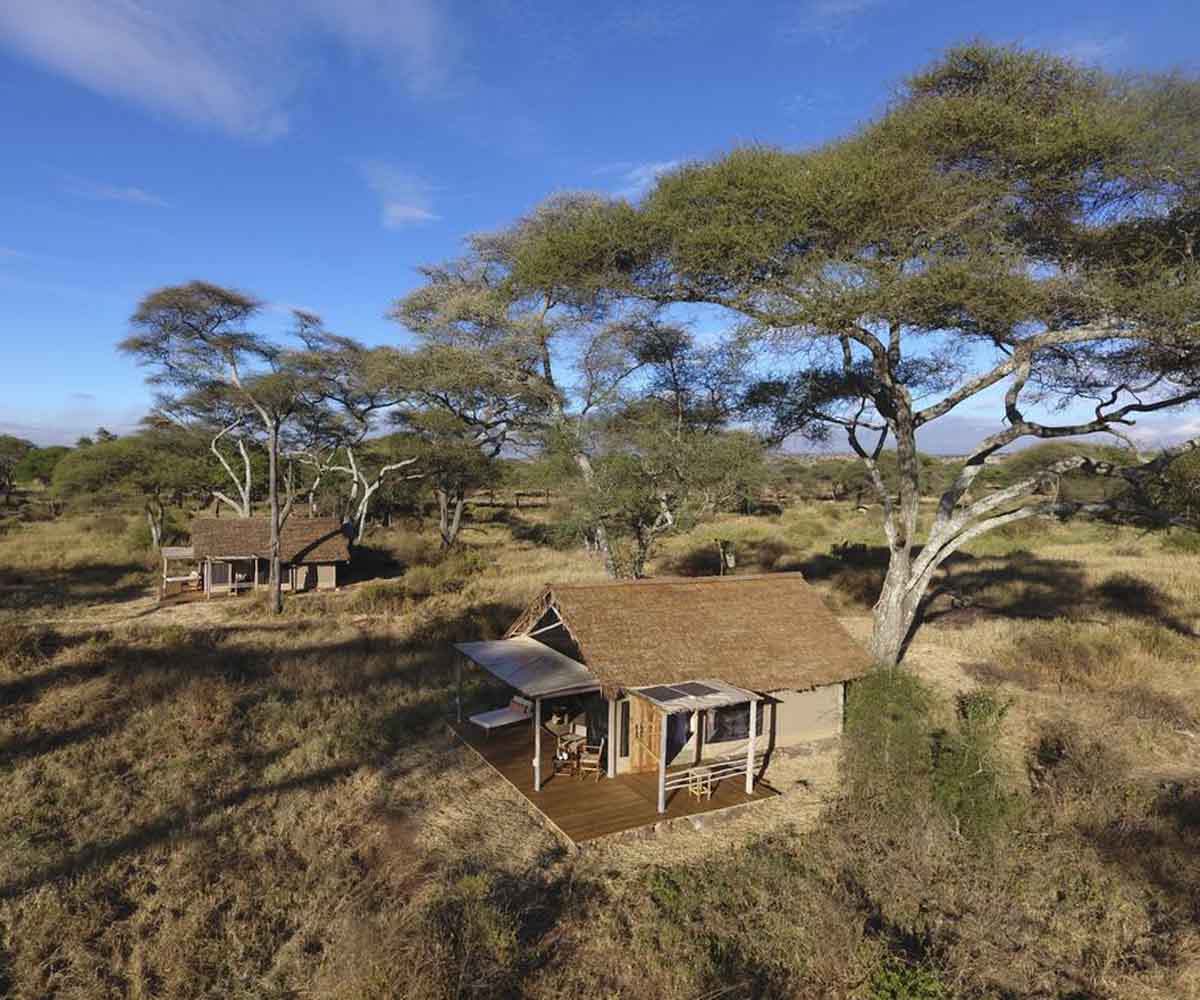
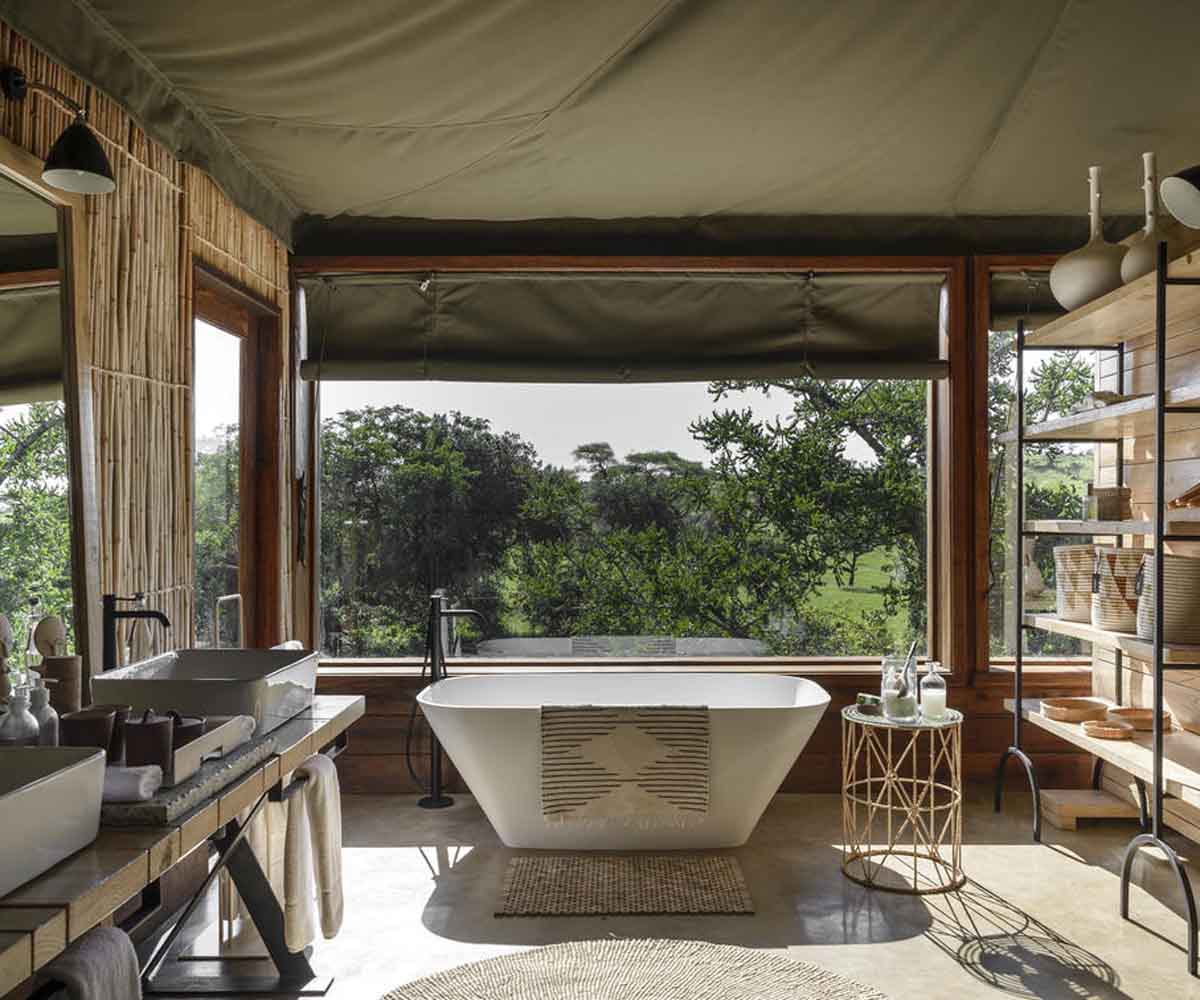
Sabora’s nine lavish, air-conditioned Bedouin tents are decked out in the style of a Twenties hunting camp, with Persian rugs, silver candlesticks, cut-glass decanters and claw-foot bathtubs. It is so Out of Africa that I half expect to bump into Karen Blixen or find Denys Finch-Hatton sipping whisky on my sofa.

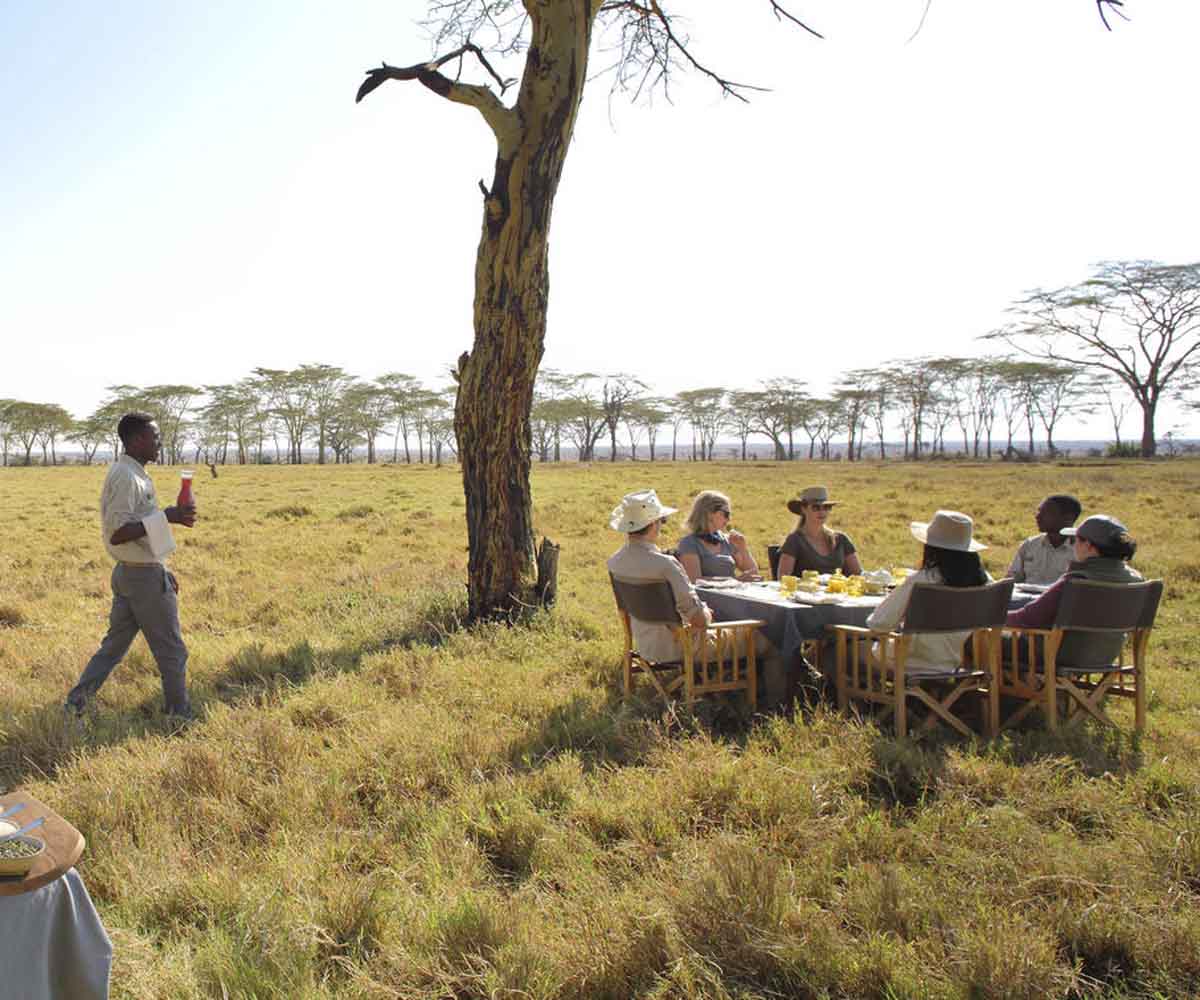
In the evenings, under a tree in which oil lamps hang like Christmas decorations, I dine on smoked salmon and fillet of beef while hyenas yowl in the surrounding darkness and the Southern Cross cartwheels in slow motion across the sky.

Yet for all its glitz, Sabora is a place in which to live at ease for a while in the open; to enjoy the space and catch the pulse of an older world that is no longer easy to find.

Outside my tent grows a desert date tree beneath whose canopy stands a bed and an umbrella for extra shade. Here after breakfast I lie one morning, with a herd of impala browsing around me and nothing else but waving grass and the blue faraway hills beyond. I feel the wind rushing over the earth, watch a bateleur eagle rocking and tilting across the sky, and think there is no finer place to be.

Most days, as the bush comes alive to a chorus of doves, I meet Joe Kibwe, my guide and driver, and we set off into the boundless grasslands to look for cats.

The herbivores are out in force. Quicksilver gazelles scud away at our approach. Giraffe – “the watchtowers of the Serengeti” – observe our progress and every ridge is adorned with a frieze of zebras. At one point we count 400 eland in a single herd, yet even they are nothing compared with the wildebeest that have finally arrived in unimaginable numbers.

For half an hour we watch them and when we leave they are still pouring out of the distant woodlands. “The nearest thing to a traffic jam you’ll ever see at Singita Grumeti,” Joe says.

It reminds me of the Mara in its age of innocence 30 years ago, a place where the grass meets the sky at the edge of the world, with nothing but horned heads between you and the horizon. All day long, from blood-red dawn to apocalyptic sunset, we drive with the sounds of the plains in our ears – the sad cries of larks and long-claws, the shriek of crowned lapwings, the squeal of zebra stallions calling to their mares – while all around us the wildebeest are moving in endless, grunting columns.

As always, it is the carnivores that steal the show. First a leopard, lying full length along a bough with all four legs and tail dangling. Then the Sabora Pride, a 15-strong family of lionesses, small cubs and older offspring lorded over by two resident males with luxuriant tobacco manes.

A few years ago they would have slunk off at the first sign of our presence. Now they regard us with almost total indifference, and at a time when lions everywhere are losing ground, it is heartening to find such a healthy family enjoying Singita Grumeti’s protection.

“Seeing how relaxed the animals have become is a joy,” says Brian Heath, the managing director of the Grumeti Fund, the private conservation trust set up by Tudor Jones. “When I first came here eight years ago they would take off as soon as they saw us. They had all been hunted from vehicles. That was why they were so spooky. Now it is so different. We have so much game and everything has settled down.”

In May, the week before my arrival, there was great excitement when five black rhinos were flown in from South Africa, to be greeted by a welcome party that included Tanzania’s president, Jakaya Kikwete.

Black rhinos, once common in the Serengeti, were so heavily poached that by 1991 only two females remained; their return marks the beginning of a multi-million dollar relocation programme backed by the Grumeti Fund.

Eventually, with GPS chips inserted into their horns and a round-the-clock guard of specially trained rangers to protect them, they will be released into the national park, where they will be joined by another 27 rhinos over the next couple of years.

“Rebuilding the biodiversity of the Serengeti ecosystem is our ultimate aim,” Heath says, “and bringing back the rhino is a key part of it.”

How appropriate, then, to discover that Singita Grumeti has a lodge called Faru Faru (Rhino Rhino in Swahili), with a spectacular location unlike any other in the Serengeti.

Just as Sabora belongs on the open plains, Faru Faru hides in an enchanted forest overlooking the Grumeti river.

Here, as in a painting by Rousseau, colobus monkeys peek through the forest canopy, shy bushbuck wander beneath arcades of flowering creepers and swallowtail butterflies flip through the sunlight on green velvet wings.

Into this jungle of shady fig trees and riverside acacias, nine luxury suites have been unobtrusively inserted. Each one has vast plate-glass picture windows that slide open at the press of a button, and the décor is a pleasing mixture of cutting-edge minimalism and full-on Africana.

The result is more like a penthouse suite than the conventional safari lodge – but with wildest Africa all around you. Penthouse it may be, but it comes with a tented canvas roof and at night, with the moon illuminating the silhouettes of baboons roosting in the trees outside my window, I listen to a lion calling from somewhere upriver.

Wherever you stay in Singita Grumeti there is no disguising the fact that you are living deep in the comfort zone. This is top-end tourism territory with knobs on, and it comes with a platinum price tag. But it also comes guilt-free.

Forget the idea that roughing it in a basic bush camp is the only way to prove your green credentials. You can chill out here with a clear conscience, knowing your tourist dollars will support all kinds of eco-friendly initiatives, from bankrolling local schools and clinics to bringing back the rhino.

Of course, what you are really buying into is a Serengeti experience in a wilderness roughly the same size as the Masai Mara. The difference is that the Mara has beds for 4,000 visitors, while Singita Grumeti draws the line at 70. And that, together with forgotten pleasures such as the freedom to drive off-road and the abundance of animals, is the greatest luxury of all.

Brian Jackman in the Serengeti

Filed under: Press Articles — Tanzania Odyssey @ 6:18 pm

Want to escape your fellow tourists on safari? Opening a five-page guide, Brian Jackman recommends a visit to the Northern Serengeti – a Masai Mara without the crowds.
Only five days before I arrived in Tanzania the Serengeti was bone-dry. The wildebeest herds had long since marched north to Kenya; and at Grumeti River Camp in the Western Corridor, the long arm of the Serengeti that reaches out towards Lake Victoria, hippos were dying for want of water.
Now the kiangazi – the dry season – is over. The November rains have broken with a vengeance and the hippos can wallow to their hearts’ content in the pools beyond my tent.
I wish I could stay longer, but Grumeti River Camp is an idyllic prelude. What I really want is to explore the secret valleys and forgotten hills of the Northern Serengeti, and an old friend has volunteered to take me there.
Paul Oliver, who comes from Norfolk, moved to Tanzania 20 years ago and is now one of the country’s most respected safari guides. We have arranged to meet at Seronera, in the heart of the park, and from there we set off in his distinctive coffee-brown, custom-built Land Rover.
“This is as far as most visitors get,” says Paul, as we head into the northern woodlands. And it’s true. Once we’ve crossed the Orangi River we do not see another vehicle until we hit camp.
It takes us seven hours to reach Paul’s private mobile safari campsite. We could have flown – there’s an airstrip nearby – but only when you travel overland does the sheer size of Africa’s most famous national park impress itself upon you.
The Kenyan border is just a few miles from camp, and in coming here I have realised a lifetime’s ambition. On the other side lies the Maasai Mara national reserve, an area as familiar to me as the Dorset hills of home. How many times have I stood there, staring down into Tanzania and longing to follow the migrating wildebeest on their long journey south?
Now here I am, on a granite hill called Wogakuria, surrounded by ancient fig trees and giant kopjes (hills) that echo to the roar of lions, and right now, with the wildebeest all around us, there is nowhere else I would rather be.
No wonder Myles Turner, last of the old-time Serengeti wardens, loved this place. Wogakuria is the highest point for miles around, and what you get from its boulder-strewn slopes is a vulture’s eye-view, an immense panorama of yellow plains, mapped with the green veins of seasonal watercourses and speckled with grazing herds of game.
From our campsite I can look deep into the Mara. At night the lights of Keekorok Safari Lodge glitter in the darkness, some 40 miles away; and next morning I can see the hot-air balloons rising from Little Governors’ Camp, and know that vehicles by the score will be fanning out over the reserve in search of big cats. But, on our side of the border, we have it all to ourselves.
Off-track driving is still allowed in the north, and over the next two days we explore the maze of nameless valleys around Wogakuria. The gift of rain has renewed the land and, wherever we go, there is life.
This is paradise found. It’s like the Maasai Mara I knew 30 years ago, with animals as far as the eye can see, and huge river crossings when the migration is passing through. You can spend a whole day, as I did, in which the only other vehicle we saw was a national park Land Rover full of armed rangers in green combat fatigues.
How could this idyllic corner of the Serengeti have been overlooked for so long?
To find out you have only to drive past the Fort Knox-style guard post at Kogatende on the Mara River. Until a couple of years ago this was bandit country, with heavily armed poaching gangs swarming down from the Isuria escarpment to prey on wildlife and tourists alike. Now, the worst of the poachers have fled. Their campfires are cold and the north is safe again for visitors.
The Tanzanians are keen to attract more tourists but, at present, the only other camp in the north-west is Sayari, overlooking the Mara River. Like Paul’s hideaway at Wogakuria it is a seasonal camp with eight spacious tents, each with king-size beds and en-suite showers, offering standards of luxury unknown in Myles Turner’s days.
From Sayari it is only a short drive into the Lamai Wedge, a sublime sweep of rolling savannah between the Mara River and the Kenyan border. The contrast with the rock-strewn hillsides and fig-tree groves of Wogakuria could not be greater. Here, the land is open to the sky, an endless sea of grass in which Thomson’s gazelles race this way and that, like shoals of fish. The wind carries the sounds of the plains, the sad cries of pipits, the shriek of crowned plovers, and to the north lies a range of enigmatic flat-topped hills, marking the border with the Maasai Mara.
Steadily we climb towards them, scouring the grasslands for cheetahs. There are lions aplenty, resting in the croton thickets and on the long stony ridges where they can catch the breeze.
But the cheetahs Paul saw a week ago have moved on in the wake of the wildebeest herds, leaving only the slouching shapes of spotted hyenas and the remains of old kills picked clean by vultures.
It’s a shame to have missed out on the cheetahs but I have one last chance to find them. After four blissful days in the north-west, Paul drops me off at Klein’s Camp, a private 24,800-acre game reserve on the park’s north-east boundary.
This is luxury camping in a wild land. My tent – marquee would be a better word – is furnished with Persian rugs and lit by crystal chandeliers. The food is unfailingly delicious and I have even been given my own butler, Ben, a soft-spoken paragon with impeccable manners, who brings my early-morning tea.
But, as always on a good safari, the greatest luxury is a good location, and ours, overlooking a hidden valley in the Kuka Hills, is Hemingway’s Africa at its best. Cape buffaloes scowl from its thorny thickets and it’s a long time since I have encountered such feisty lions.
On one game drive we track down a coalition of five young males, fired up with testosterone and looking for trouble. One, a wild-looking tearaway with an ASBO attitude, decides to stalk our vehicle and then chase us as we drive away.
On we go in the last hour of daylight and it is then, with the Kuka Hills already in shadow, that we find a cheetah on the plains and watch her methodically sniff out a topi fawn in the long grass while its mother stands helpless nearby.
Back at camp, I hear there is a pack of 18 wild dogs in the hills of Loliondo, just outside the park, and Daniel knows a tracker who will take me to their den next morning.
Loliondo is Maasai country, and we drive for miles past thornbush stockades and red-robed herd-boys with flocks of goats until we reach a range of hills. From here, it’s a 40-minute hike to the den.
We climb steadily, without talking. The tracker’s “thousand-miler” sandals, cut from the treads of discarded car tyres, make no sound on the wooded slopes. He is armed only with a spear.
From the bushes up ahead comes a gruff bark. The tracker points, and there are the dogs. With their big round ears they are unmistakable and their brindled coats blend perfectly with the dappled shade. No wonder their Swahili name is mbwa mwitu: the dogs of the forest.
There are only three, left behind to guard the den while the rest of the pack is hunting, and no sign of the pups, but I don’t care. Wild dogs are a vanishing species. It is 25 years since I last saw them in East Africa, and to know they are still here is hugely encouraging. For a few precious moments we sit and watch them. By now they have become accustomed to our presence, and lie quietly at the entrance to the den while from all around come the throbbing cries of Cape turtledoves.
Whenever I think of the Serengeti it is always the big cats that spring to mind and this safari has been no different. In just 10 days I have seen two cheetahs and nearly 60 lions. But long after I have returned home it is the image of those three dogs that haunts me, as wild and mysterious as Africa itself.

test
Paul Oliver, who comes from Norfolk, moved to Tanzania 20 years ago and is now one of the country’s most respected safari guides. We have arranged to meet at Seronera, in the heart of the park, and from there we set off in his distinctive coffee-brown, custom-built Land Rover.
“This is as far as most visitors get,” says Paul, as we head into the northern woodlands. And it’s true. Once we’ve crossed the Orangi River we do not see another vehicle until we hit camp.
It takes us seven hours to reach Paul’s private mobile safari campsite. We could have flown – there’s an airstrip nearby – but only when you travel overland does the sheer size of Africa’s most famous national park impress itself upon you.
The Kenyan border is just a few miles from camp, and in coming here I have realised a lifetime’s ambition. On the other side lies the Maasai Mara national reserve, an area as familiar to me as the Dorset hills of home. How many times have I stood there, staring down into Tanzania and longing to follow the migrating wildebeest on their long journey south?
Now here I am, on a granite hill called Wogakuria, surrounded by ancient fig trees and giant kopjes (hills) that echo to the roar of lions, and right now, with the wildebeest all around us, there is nowhere else I would rather be.
No wonder Myles Turner, last of the old-time Serengeti wardens, loved this place. Wogakuria is the highest point for miles around, and what you get from its boulder-strewn slopes is a vulture’s eye-view, an immense panorama of yellow plains, mapped with the green veins of seasonal watercourses and speckled with grazing herds of game.
From our campsite I can look deep into the Mara. At night the lights of Keekorok Safari Lodge glitter in the darkness, some 40 miles away; and next morning I can see the hot-air balloons rising from Little Governors’ Camp, and know that vehicles by the score will be fanning out over the reserve in search of big cats. But, on our side of the border, we have it all to ourselves.
Off-track driving is still allowed in the north, and over the next two days we explore the maze of nameless valleys around Wogakuria. The gift of rain has renewed the land and, wherever we go, there is life.
This is paradise found. It’s like the Maasai Mara I knew 30 years ago, with animals as far as the eye can see, and huge river crossings when the migration is passing through. You can spend a whole day, as I did, in which the only other vehicle we saw was a national park Land Rover full of armed rangers in green combat fatigues.
How could this idyllic corner of the Serengeti have been overlooked for so long?
To find out you have only to drive past the Fort Knox-style guard post at Kogatende on the Mara River. Until a couple of years ago this was bandit country, with heavily armed poaching gangs swarming down from the Isuria escarpment to prey on wildlife and tourists alike. Now, the worst of the poachers have fled. Their campfires are cold and the north is safe again for visitors.
The Tanzanians are keen to attract more tourists but, at present, the only other camp in the north-west is Sayari, overlooking the Mara River. Like Paul’s hideaway at Wogakuria it is a seasonal camp with eight spacious tents, each with king-size beds and en-suite showers, offering standards of luxury unknown in Myles Turner’s days.
From Sayari it is only a short drive into the Lamai Wedge, a sublime sweep of rolling savannah between the Mara River and the Kenyan border. The contrast with the rock-strewn hillsides and fig-tree groves of Wogakuria could not be greater. Here, the land is open to the sky, an endless sea of grass in which Thomson’s gazelles race this way and that, like shoals of fish. The wind carries the sounds of the plains, the sad cries of pipits, the shriek of crowned plovers, and to the north lies a range of enigmatic flat-topped hills, marking the border with the Maasai Mara.
Steadily we climb towards them, scouring the grasslands for cheetahs. There are lions aplenty, resting in the croton thickets and on the long stony ridges where they can catch the breeze.
But the cheetahs Paul saw a week ago have moved on in the wake of the wildebeest herds, leaving only the slouching shapes of spotted hyenas and the remains of old kills picked clean by vultures.
It’s a shame to have missed out on the cheetahs but I have one last chance to find them. After four blissful days in the north-west, Paul drops me off at Klein’s Camp, a private 24,800-acre game reserve on the park’s north-east boundary.
This is luxury camping in a wild land. My tent – marquee would be a better word – is furnished with Persian rugs and lit by crystal chandeliers. The food is unfailingly delicious and I have even been given my own butler, Ben, a soft-spoken paragon with impeccable manners, who brings my early-morning tea.
But, as always on a good safari, the greatest luxury is a good location, and ours, overlooking a hidden valley in the Kuka Hills, is Hemingway’s Africa at its best. Cape buffaloes scowl from its thorny thickets and it’s a long time since I have encountered such feisty lions.
On one game drive we track down a coalition of five young males, fired up with testosterone and looking for trouble. One, a wild-looking tearaway with an ASBO attitude, decides to stalk our vehicle and then chase us as we drive away.
On we go in the last hour of daylight and it is then, with the Kuka Hills already in shadow, that we find a cheetah on the plains and watch her methodically sniff out a topi fawn in the long grass while its mother stands helpless nearby.
Back at camp, I hear there is a pack of 18 wild dogs in the hills of Loliondo, just outside the park, and Daniel knows a tracker who will take me to their den next morning.
Loliondo is Maasai country, and we drive for miles past thornbush stockades and red-robed herd-boys with flocks of goats until we reach a range of hills. From here, it’s a 40-minute hike to the den.
We climb steadily, without talking. The tracker’s “thousand-miler” sandals, cut from the treads of discarded car tyres, make no sound on the wooded slopes. He is armed only with a spear.
From the bushes up ahead comes a gruff bark. The tracker points, and there are the dogs. With their big round ears they are unmistakable and their brindled coats blend perfectly with the dappled shade. No wonder their Swahili name is mbwa mwitu: the dogs of the forest.
There are only three, left behind to guard the den while the rest of the pack is hunting, and no sign of the pups, but I don’t care. Wild dogs are a vanishing species. It is 25 years since I last saw them in East Africa, and to know they are still here is hugely encouraging. For a few precious moments we sit and watch them. By now they have become accustomed to our presence, and lie quietly at the entrance to the den while from all around come the throbbing cries of Cape turtledoves.
Whenever I think of the Serengeti it is always the big cats that spring to mind and this safari has been no different. In just 10 days I have seen two cheetahs and nearly 60 lions. But long after I have returned home it is the image of those three dogs that haunts me, as wild and mysterious as Africa itself.
Paul Oliver, who comes from Norfolk, moved to Tanzania 20 years ago and is now one of the country’s most respected safari guides. We have arranged to meet at Seronera, in the heart of the park, and from there we set off in his distinctive coffee-brown, custom-built Land Rover.
“This is as far as most visitors get,” says Paul, as we head into the northern woodlands. And it’s true. Once we’ve crossed the Orangi River we do not see another vehicle until we hit camp.
It takes us seven hours to reach Paul’s private mobile safari campsite. We could have flown – there’s an airstrip nearby – but only when you travel overland does the sheer size of Africa’s most famous national park impress itself upon you.
The Kenyan border is just a few miles from camp, and in coming here I have realised a lifetime’s ambition. On the other side lies the Maasai Mara national reserve, an area as familiar to me as the Dorset hills of home. How many times have I stood there, staring down into Tanzania and longing to follow the migrating wildebeest on their long journey south?
Now here I am, on a granite hill called Wogakuria, surrounded by ancient fig trees and giant kopjes (hills) that echo to the roar of lions, and right now, with the wildebeest all around us, there is nowhere else I would rather be.
No wonder Myles Turner, last of the old-time Serengeti wardens, loved this place. Wogakuria is the highest point for miles around, and what you get from its boulder-strewn slopes is a vulture’s eye-view, an immense panorama of yellow plains, mapped with the green veins of seasonal watercourses and speckled with grazing herds of game.
From our campsite I can look deep into the Mara. At night the lights of Keekorok Safari Lodge glitter in the darkness, some 40 miles away; and next morning I can see the hot-air balloons rising from Little Governors’ Camp, and know that vehicles by the score will be fanning out over the reserve in search of big cats. But, on our side of the border, we have it all to ourselves.
Off-track driving is still allowed in the north, and over the next two days we explore the maze of nameless valleys around Wogakuria. The gift of rain has renewed the land and, wherever we go, there is life.
This is paradise found. It’s like the Maasai Mara I knew 30 years ago, with animals as far as the eye can see, and huge river crossings when the migration is passing through. You can spend a whole day, as I did, in which the only other vehicle we saw was a national park Land Rover full of armed rangers in green combat fatigues.
How could this idyllic corner of the Serengeti have been overlooked for so long?
To find out you have only to drive past the Fort Knox-style guard post at Kogatende on the Mara River. Until a couple of years ago this was bandit country, with heavily armed poaching gangs swarming down from the Isuria escarpment to prey on wildlife and tourists alike. Now, the worst of the poachers have fled. Their campfires are cold and the north is safe again for visitors.
The Tanzanians are keen to attract more tourists but, at present, the only other camp in the north-west is Sayari, overlooking the Mara River. Like Paul’s hideaway at Wogakuria it is a seasonal camp with eight spacious tents, each with king-size beds and en-suite showers, offering standards of luxury unknown in Myles Turner’s days.
From Sayari it is only a short drive into the Lamai Wedge, a sublime sweep of rolling savannah between the Mara River and the Kenyan border. The contrast with the rock-strewn hillsides and fig-tree groves of Wogakuria could not be greater. Here, the land is open to the sky, an endless sea of grass in which Thomson’s gazelles race this way and that, like shoals of fish. The wind carries the sounds of the plains, the sad cries of pipits, the shriek of crowned plovers, and to the north lies a range of enigmatic flat-topped hills, marking the border with the Maasai Mara.
Steadily we climb towards them, scouring the grasslands for cheetahs. There are lions aplenty, resting in the croton thickets and on the long stony ridges where they can catch the breeze.
But the cheetahs Paul saw a week ago have moved on in the wake of the wildebeest herds, leaving only the slouching shapes of spotted hyenas and the remains of old kills picked clean by vultures.
It’s a shame to have missed out on the cheetahs but I have one last chance to find them. After four blissful days in the north-west, Paul drops me off at Klein’s Camp, a private 24,800-acre game reserve on the park’s north-east boundary.
This is luxury camping in a wild land. My tent – marquee would be a better word – is furnished with Persian rugs and lit by crystal chandeliers. The food is unfailingly delicious and I have even been given my own butler, Ben, a soft-spoken paragon with impeccable manners, who brings my early-morning tea.
But, as always on a good safari, the greatest luxury is a good location, and ours, overlooking a hidden valley in the Kuka Hills, is Hemingway’s Africa at its best. Cape buffaloes scowl from its thorny thickets and it’s a long time since I have encountered such feisty lions.
On one game drive we track down a coalition of five young males, fired up with testosterone and looking for trouble. One, a wild-looking tearaway with an ASBO attitude, decides to stalk our vehicle and then chase us as we drive away.
On we go in the last hour of daylight and it is then, with the Kuka Hills already in shadow, that we find a cheetah on the plains and watch her methodically sniff out a topi fawn in the long grass while its mother stands helpless nearby.
Back at camp, I hear there is a pack of 18 wild dogs in the hills of Loliondo, just outside the park, and Daniel knows a tracker who will take me to their den next morning.
Loliondo is Maasai country, and we drive for miles past thornbush stockades and red-robed herd-boys with flocks of goats until we reach a range of hills. From here, it’s a 40-minute hike to the den.
We climb steadily, without talking. The tracker’s “thousand-miler” sandals, cut from the treads of discarded car tyres, make no sound on the wooded slopes. He is armed only with a spear.
From the bushes up ahead comes a gruff bark. The tracker points, and there are the dogs. With their big round ears they are unmistakable and their brindled coats blend perfectly with the dappled shade. No wonder their Swahili name is mbwa mwitu: the dogs of the forest.
There are only three, left behind to guard the den while the rest of the pack is hunting, and no sign of the pups, but I don’t care. Wild dogs are a vanishing species. It is 25 years since I last saw them in East Africa, and to know they are still here is hugely encouraging. For a few precious moments we sit and watch them. By now they have become accustomed to our presence, and lie quietly at the entrance to the den while from all around come the throbbing cries of Cape turtledoves.
Whenever I think of the Serengeti it is always the big cats that spring to mind and this safari has been no different. In just 10 days I have seen two cheetahs and nearly 60 lions. But long after I have returned home it is the image of those three dogs that haunts me, as wild and mysterious as Africa itself.

Spice and easy: Tanzania comes up trumps as Rory Bremner visits Zanzibar and Pemba

Filed under: Press Articles — Tanzania Odyssey @ 6:15 pm

reproduced from the mail online 12th Feb 2012

By Rory Bremner

I’ve been very bad at arranging swanky holidays recently. That is, proper breaks, without the children. In fact, over the past 18 months, the sum total of Mr and Mrs Bremner’s trips away have amounted to just four nights in the South of France and two nights in Harrogate. I’d highly recommend both, by the way, but they’re hardly in the Hello! category.

When the chance did finally come for us to enjoy something more exotic, I faced an immediate problem – where, exactly, do you go for sunshine at this time of year? Political unrest in Egypt and the Maghreb, the bursting of Dubai’s bubble and the likelihood of bumping into Michael Winner in the Caribbean have all conspired to narrow the choice.

Our criteria for a week’s holiday were simple: less than ten hours’ flying, preferably overnight; and a manageable time difference to somewhere offering both adventure and relaxation.

The beaches of India, the Maldives, Indonesia and the Far East were deemed too far, even though Burma looks tempting now that Aung San Suu Kyi’s 15-year staycation has come to a welcome end.

Eschewing old favourites Cape Town and Morocco, we plumped for Zanzibar off the East African coast. Great call.

Zanzibar – the original Spice Island. The very name conjures up exotic images in the mind’s eye: tropical beaches, spice markets, dhow sails in the sunset. Well, what your mind sees is what you get.

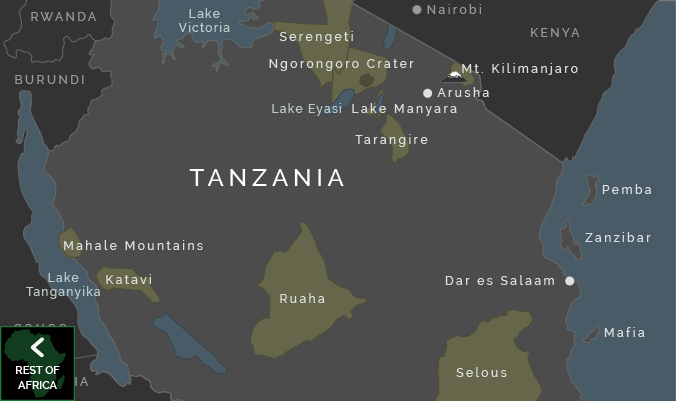
In just under ten hours, good old British Airways had got us, comfortably and right on schedule, to Dar es Salaam, capital of Tanzania, where the tourists divide – some heading for the safari reserves of Ruaha, Selous or the Serengeti to see the animals (and the minibuses) in the Ngorongoro crater or climb Kilimanjaro.

Others, ourselves included, were transported to await our local onward flight in the VIP terminal.

This is in fact a basic concrete waiting room with open sides where birds hop in and out, a handful of Africans doze and a couple of locals sit chatting at a cafe called The Art of Coffee – the ‘art’ apparently being to dispense coffee with as much nonchalance and lack of interest as it’s possible to muster. Welcome to Africa.

After a longish wait, our pilot arrived to tell us (reassuringly) that rather than wait another hour for fuel, we’d pick up some in Zanzibar before flying to our final destination: Pemba Island.

African jewel: Zanzibar lives up to its image, with dhows a common sight on its waves

The Arabs who settled here from the 7th Century called it ‘Al Khundra’ – the green island – and Pemba, 50 miles north-east of Zanzibar, is just that. More hilly than its southerly sister, its coastline is fringed with mangroves, date palms and clove trees – three million of them, it’s said – making Pemba the world’s leading exporter of cloves.

But just about everything grows here: bananas, papaya, mangos, coconuts, black pepper, grapefruit, and, of course, the spices that give this group of islands their name and guaranteed them such a key role in the centuries of trade that plied its way up and down the coast.

Such was the attraction of the islands that in the 1830s the Sultan of Oman moved his court here and ruled Oman from Zanzibar. The Arab heritage survives today, with the island’s population almost totally Muslim.

From Pemba airport, a 40-minute taxi journey takes us south, past villages, schools, acres of lush tropical jungle and roadside displays of cloves drying on mats. From the harbour, the hotel’s boat takes us across the water to Fundu Lagoon resort.

Like the Bounty hunters in those adverts, we came in search of paradise, and we found it.

The grey, palm-thatched roofs of the hotel’s 18 tents are just visible among the trees, stretching along the lagoon’s shoreline and up the hillside behind.

Fundu may have been established by the fashion designer Ellis Flyte, but its charm is entirely natural. This is a barefoot, close-to-nature kind of place. The tents are the luxury safari type, varying in size but each having a bedroom (simple four-poster bed with mosquito net), bathroom with shower, sinks and loo. One night a playful vervet monkey kept my wife awake by rolling nuts down the roof.

Each tent has a deck area; the superior ones have verandas and plunge-pools. Meals are delicious – from the fruit platters, pastries or cooked breakfasts in the morning to three-course lunches and dinners – and all are served with the gentleness and friendliness that characterises Fundu.

The place is magical – unpretentious and relaxing – with the only sounds the lapping of the waves, the call of swifts and curlews and the gentle clinking of little shells as the water washes and caresses them back and forth along the shore.

The lagoon is barely 30 yards from the beachside tents, and an evening swim in the beautifully warm water followed by a walk along the beach for a sundowner on the jetty and candle-lit dinner in the dining room made for a perfect end to each day.

On our last night, we took a sunset dhow trip with our fellow guests before being served our own private dinner on the beach – an unforgettable treat.

If you’re easily bored, you can take a kayak out on the lagoon, have an excellent massage with either of the sweet Balinese therapists in the pool spa, visit the local village or explore ruins in the mangrove creek. The diving, too, is excellent and suitable for beginners or the advanced, with great visibility and a muchpraised variety of fish and coral.

A handful of villagers pass along the beach (reminding us that people live here), and to its credit Fundu is actively involved in local village and community projects.

Four nights there was only just enough – we wished it could have been more.

January and February are the hottest months and some may find the tents uncomfortably warm and airless at night, despite the ceiling fans.

That apart, we absolutely loved it, in common with a huge majority of TripAdvisor reviewers. Complaints about millipedes and ‘People Staring At My Wife’ are far outweighed by praise for Fundu’s peace, atmosphere and welcome. You can access the internet from the hotel computer, and the mobile-phone signal is better than back home. What’s not to love? For most, it will be the experience of a lifetime.

Hot stuff: Rory checks out the Spice Market in the Zanzibar capital Stonetown

Back on Zanzibar itself, we spent a delightful few hours exploring the capital, Stone Town. It is heavily influenced by its colonial past, which involved Europeans, Arabs and even Americans. They built the island’s now-defunct railway in 1904, putting up overhead electric cables as they went, with the result that Stone Town actually had electric light before London.

The town boasts a Catholic church, 40 mosques, a colourful Hindu temple and a maze of narrow alleyways reminiscent of an Arab souk. It also boasts the childhood home of Farrokh Bulsara, better known as Freddie Mercury, who left for England with his family during the 1964 revolution, but the eponymous Mercury’s bar is a reminder that they will not let him go (Bismillah, No! They will not let him go!).

On the open-air rooftop terrace at 236 Hurumzi – once the famously luxurious Emerson and Green hotel – we enjoyed a perfect prawn curry and chicken fajita lunch, with a fantastic view over corrugated-iron rooftops, towers and domes to the harbour beyond.

An hour’s drive through the interior from Stone Town, and down a long gravel track, The Residence makes for an incongruous sight: a gated compound of villas reminiscent of an American condominium or golf resort. Uniformed and pith-helmeted staff at the entrance reinforce the impression.

Hmmm. Golf-buggies and guests on bicycles move along pathways like figures on an architect’s model. As its name, and its prices, suggest, this is a modern, international luxury resort hotel, part of the Residence chain (they have others in Tunis and Mauritius) but it’s undeniably impressive.

There are 66 spacious villas of varying categories, from luxury and prestige to presidential, arranged around landscaped and manicured gardens. All have pools, wi-fi and air-conditioning. It’s the kind of oasis that welcomes parched, exhausted travellers with a choice of still or sparkling water, a place for those who think Africa – like Mark Twain’s Canada – is a great country, but not for the whole weekend.

To be honest, you could be anywhere – Portugal, Dubai or Mauritius, say – but that’s not the point. It’s new (it opened last April), the food and service are excellent (to the point of overattentive) and, with a mile of pristine beach, a gym, spa, tennis court and fine-dining restaurant, it propels Zanzibar to the forefront of destinations for those wanting a luxury beach holiday within ten hours of Europe.

It’s not Africa – you should do yourself (and Zanzibar) a favour and spend time in the real world outside the compound – but nevertheless, The Residence is right up there with the best in the world, no question.

And let’s face it: Zanzibar – the original Spice Island – has had Freddie Mercury, so what’s wrong with a bit of Posh Spice

Tanzania, Africa: a luxury view of the Serengeti wildebeest migration

Filed under: Press Articles — Tanzania Odyssey @ 6:10 pm

Brian Jackman watches the Serengeti wildebeest migration – or ‘the greatest show on earth’ – in comfort that not even Hemingway would have enjoyed.

Snug in my tent in the northern Serengeti, I listened to the strange, pulsing cries of a swamp nightjar in the surrounding trees. Later, when the nightjar had fallen silent and dawn seeped through the canvas, a lion began to roar not far off. I dressed hurriedly, stepped outside and eventually picked him out with my binoculars, sprawling at full length on a granite kopje, gold mane on fire in the morning sun. What a way to start the day.

In 1913, an American big-game hunter called Stewart Edward White set out from Nairobi and headed south. “We walked for miles over burned-out country,” he wrote. “Then I saw the green trees of the river, walked two miles more and found myself in paradise.”

What he described is what we now call the Serengeti, a Masai word meaning “the land that goes on for ever”, where, every year, drawn by the presence of some 3,000 lions and above all by the spectacle of the wildebeest migration – the greatest wildlife show on earth – more than 90,000 visitors flock to what has become the world’s most famous national park.

Yet distances are so vast that it is still possible to find space and solitude, especially in the northernmost reaches of the park, whose horizons are empty of everything except wildlife. This is Tanzania’s Top End, where nothing but a line of white stones in the grass separates the Serengeti from Kenya’s Masai Mara national reserve – a border the migrating herds cross with impunity every year.

Not so long ago this was bandit country, crawling with poachers and cut off from the rest of the park by thorny woodlands infested with tsetse flies. Now the poachers are on the back foot. The park rangers are firmly in control and tourism is taking root on these remote savannahs of the wild northwest.

Among the safari specialists who have moved in is &Beyond, a Johannesburg-based company whose upmarket portfolio of camps and lodges is matched by a long-standing commitment to conservation. In 2006 it came up with the idea of Serengeti Under Canvas, a seasonal camp with the lightest of footprints that would move to different locations during the year so that guests would never be more than an hour’s drive from the migration. Its newest site is a dappled grove with far-reaching views into Kenya, and if you go there in late October – as I did – you will find yourself in the thick of the action.

Not even Hemingway in his heyday enjoyed such comforts as those provided by its nine spacious walk-in tents, each one a khaki cave of comfort with en-suite loos, hot bucket showers, and polished brass bowls for washing and shaving. Persian rugs complete the picture and nothing is left to chance. There are even brollies for wet days and hot-water bottles for chilly nights. Five-star camping this may be, but it is offered with an elegant simplicity that sits easily in the pristine surroundings.

Around the camp lies a sea of bush, a neglected orchard of small, crooked trees lit up by the dazzle of galloping zebras. Through the leafy canopy loom granite whalebacks – including the one where I saw the lion – leading to a wild, broken country of rocky ridges and grassy valleys in which steep-sided korongos – seasonal watercourses – wind down to the Bologonja River.

In November the camp moves south, following the herds to a new location in the Seronera Valley; and in January it moves again to be on the spot for the season of birth on the short grass plains between Lake Ndutu and the Gol Mountains. But it is here in this far northwest corner of the park that the big river crossings take place, and if you don’t want to miss this extraordinary spectacle, then Serengeti Under Canvas is the place to be.

For days, delayed by the onset of the rains, the wildebeest had been massing in the Lamai Wedge, a triangle of pristine grasslands between the Kenyan border and the Mara River. Now, driven by the urge to return to their calving grounds, they were unstoppable. Regardless of the waiting crocodiles they poured across the fast-flowing river, like an army in full retreat.

With me was Les Carlisle, &Beyond’s group conservation manager, who had flown up from Johannesburg to join me. He has spent his whole working life in the bush, yet even he was rendered almost speechless by the drama unfolding around our Land Cruiser. “Unbelievable,” he muttered as we watched them plunging headlong into the water. An hour later they were still storming across in wave after wave of tossing heads, eyes rolling in panic until they stumbled clear of the water and thundered past us on either side.

We witnessed only one casualty, a yearling wildebeest dragged under by a monster croc, and even while the crossing was at its height the other river creatures – hippos, storks and malachite kingfishers – got on with their lives as if nothing was happening. Nearby lay a lioness fast asleep in a thicket, her belly distended by an earlier meal; and at one point an Egyptian goose with a dozen fluffy goslings paddled right through the midst of the struggling herds.

For the next few days the wildebeest were all around camp, filling the air with their sonorous groans as they swarmed among the trees, coalescing like molasses on the open hillsides before streaming away in unbroken columns that stretched for miles.

For the Serengeti predators the arrival of the migration signals a time of plenty. Every night echoed to the hacksaw cough of prowling leopards, and every morning we went looking for lions among the Wogakuria Kopjes, an African Dartmoor of granite outcrops that pierce the infinity of plain and sky. You couldn’t design a better big-cat habitat than this tumbledown chaos of cottage-size boulders, and most days the lions obliged, posing against the blue on a granite dome or else staring sphinx-like into the distance where Mlima Saba – the Seven Hills – mark the beginning of the Masai Mara. No wonder Myles Turner, the renowned Serengeti warden of the 1960s, loved this area above all others.

Lions are not the only creatures to seek the shelter of the kopjes. Agile klipspringers – small antelopes that stand on tiptoe, like ballet dancers – keep watch from these enigmatic rock castles. Leopards give birth in hidden caves, and fig trees rooted among the crevices provide fruit for green pigeons and deep shade for eagle owls.

The area I loved best, though, lay across the Bologonja River, where immense plains rolled away to the Nyamalumbwa Hills. This was new country for me – the final piece of the Serengeti jigsaw and every bit as uplifting as the more familiar grasslands in the south of the park. Apart from the desert dates whose parasol shapes graced every skyline, the plains were virtually treeless. Jackals rose out of the land and trotted away at our approach. Eland ran along the horizon and the clear highland air was filled with the guttural cries of sandgrouse.

Late-afternoon storms had replenished the landscape, greening the hillsides where drifts of white taka-taka flowers now blossomed among the scattered bones of old kills – a perfect metaphor for the Serengeti, where life and death go hand in hand.

In this infinity of grass and cloud shadows we drove all day and never saw another soul. We searched for cheetahs but instead, far out in the all-embracing loneliness of the plains, we came upon a pair of mating lions, lying as if half-drugged by the heat and oblivious to the European swallows hawking for insects about their ears.

Back in camp at end of day, I arrived to find that sundowners had been arranged on a nearby kopje. Red Masai blankets had been laid out on the flat rocks, and there I sat in the deepening amber light, cold beer in hand, looking out over what felt like the whole of Africa as thunder rumbled in the hills and curtains of rain trailed over the expanse.

Wildebeest migration basics

Brian Jackman travelled with Africa Odyssey (020 7471 8780; www.africaodyssey.com). The company can arrange a week’s safari based on three nights at Serengeti Under Canvas and three nights at &Beyond’s Grumeti River Camp in the Western Corridor from £4,975 per person, including return BA economy flight from London, all local flights and one night in Nairobi at the Palacina Hotel.
A new edition of Brian Jackman’s wildlife classic The Marsh Lions: the Story of an African Pride has been published by Bradt Travel Guides. It is available from Telegraph Books (0844 871 1515; books.telegraph.co.uk) at £9.99 plus 99p p&p.

The best places to see the Serengeti wildebeest

For the Serengeti wildebeest every year is an endless journey, chasing the rains in a race for life. The action takes place across 154,000 square miles of woodlands, hills and open plains, a wilderness bigger than Holland including not only the Serengeti national park and Kenya’s Maasai Mara national reserve but also the dispersal areas beyond.

The key players in this 1,200-mile odyssey are the wildebeest – all 1.3 million of them – but they are joined on their journey by 200,000 zebras, 350,000 gazelles and12,000 elands.

The yearly cycle begins in the south of the park when half a million calves are born between January and March – most in a three-week period. Up and running almost from the moment they hit the ground, they grow fast on the rich volcanic soils of the short-grass plain. But when the long rains of April and May are over the plains dry out and the grazers must move on.

Herds tend to follow the rainfall gradient, which increases from south-east to north-west. On leaving the calving grounds at the end of May, some head north into the Seronera Valley, but most push on into the Western Corridor, where they must play Russian roulette with monster crocodiles as they cross the Grumeti River.

June is the rutting season, which takes place as the wildebeest swarm through the park’s northern woodlands en route to their dry season refuge in the Maasai Mara.

Zebras are often the first to arrive in the Mara, chomping down the tall red oat grass with the wildebeest hot on their heels. Here they remain from July to October, sweeping this way and that across the reserve in search of fresh grazing. If you want to see them storming across the Mara River, this is the time to come.

With the beginning of the short rains in late October or early November the migration makes its way back into the Serengeti, making this a good time to be anywhere in the north of the park between Klein’s Camp and the Lamai Wedge. By December, having emerged from the northern woodlands, the herds pour across the Seronera Valley to mass on their calving grounds again and the circle is complete.

Older Posts »

Powered by WordPress